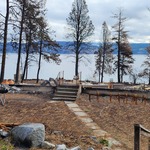
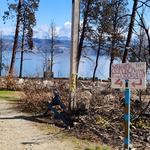
It's a great question. Rebuilding a camp on a burned, steep, culturally significant piece of land isn't like rebuilding a house in town. Every step has had to happen in the right order, with the right approvals, and with real care for the land. Here's how the last three years have unfolded, and why we believe the wait will be worth it.
August 2023: The fire
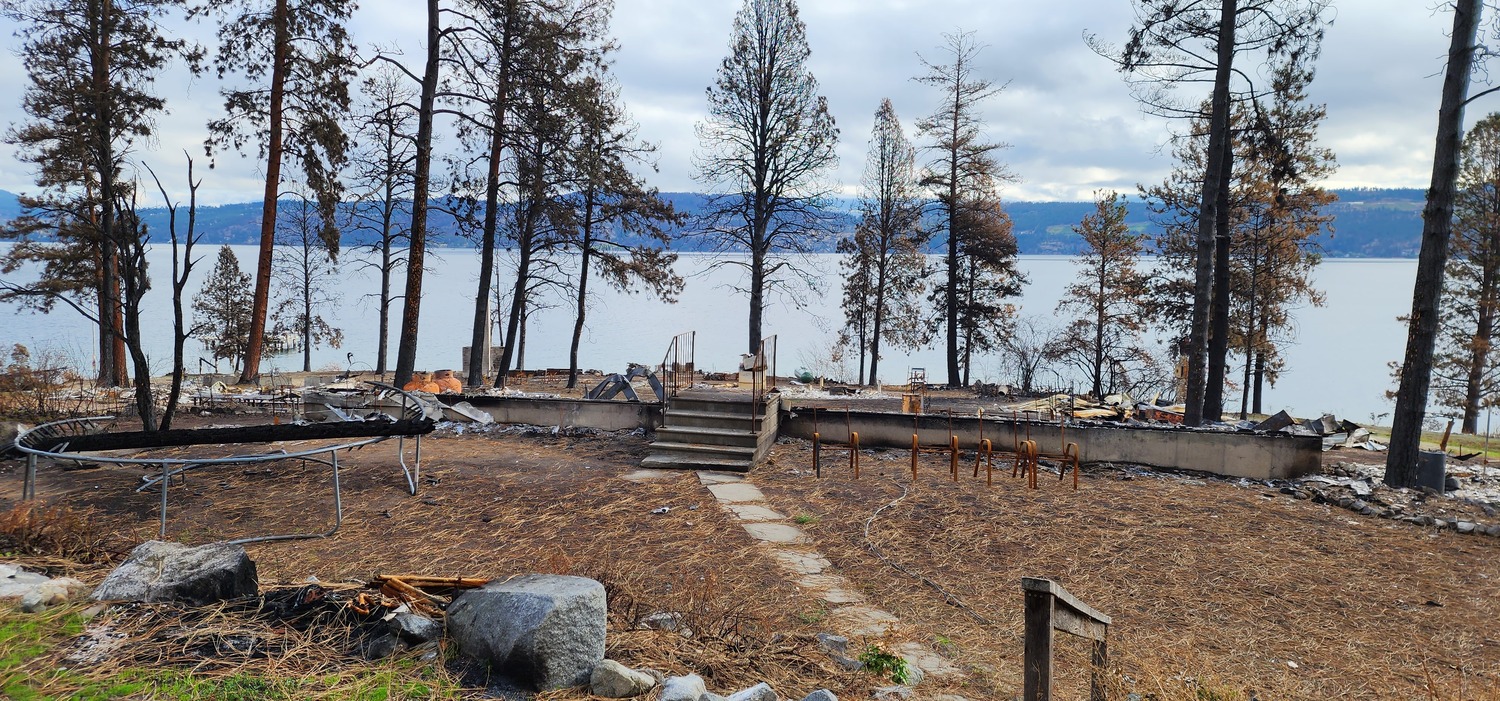
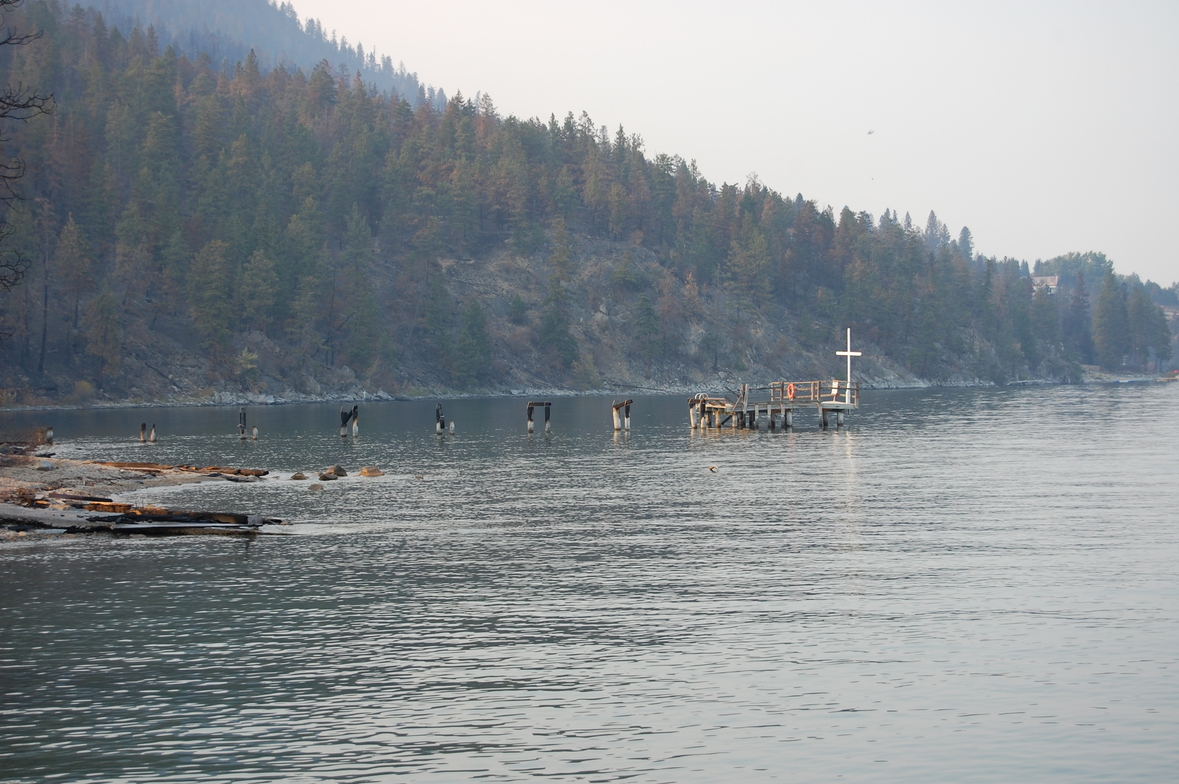
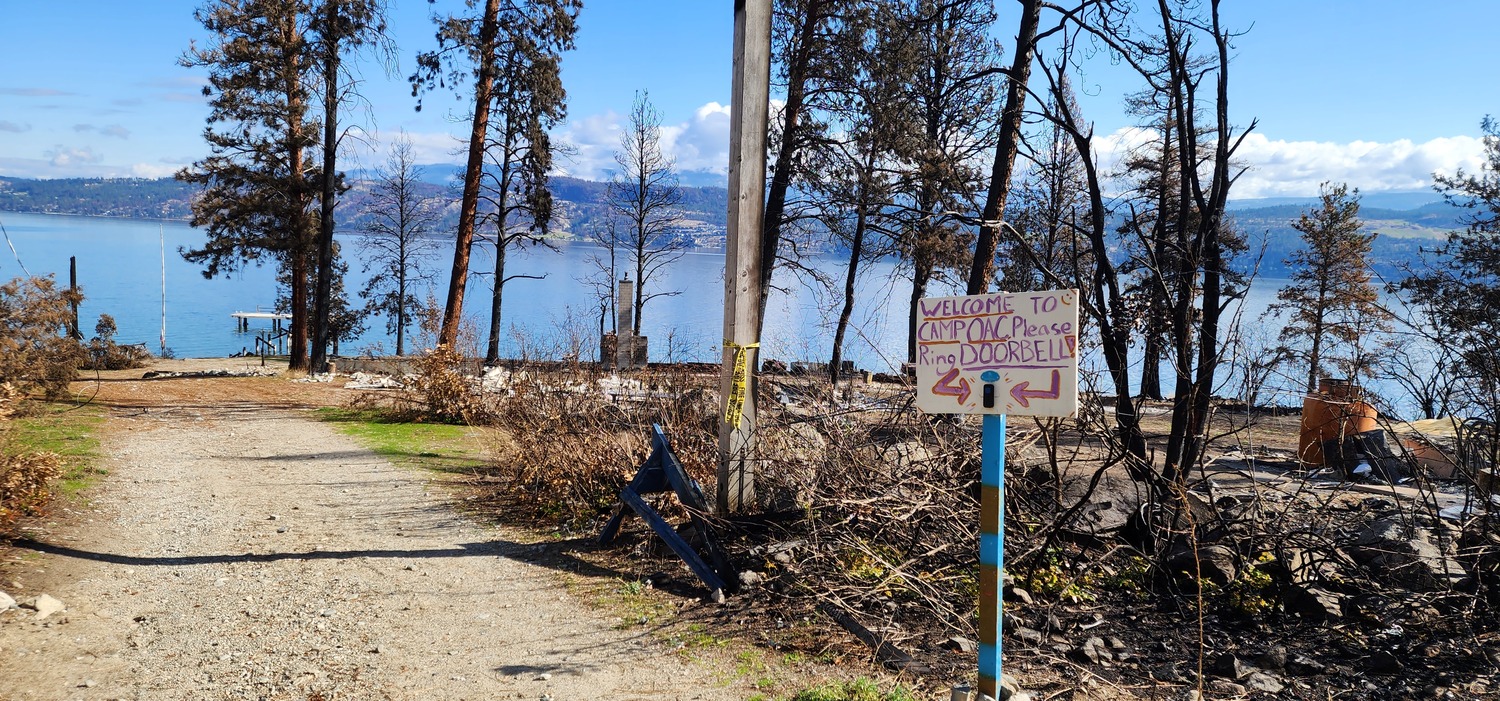
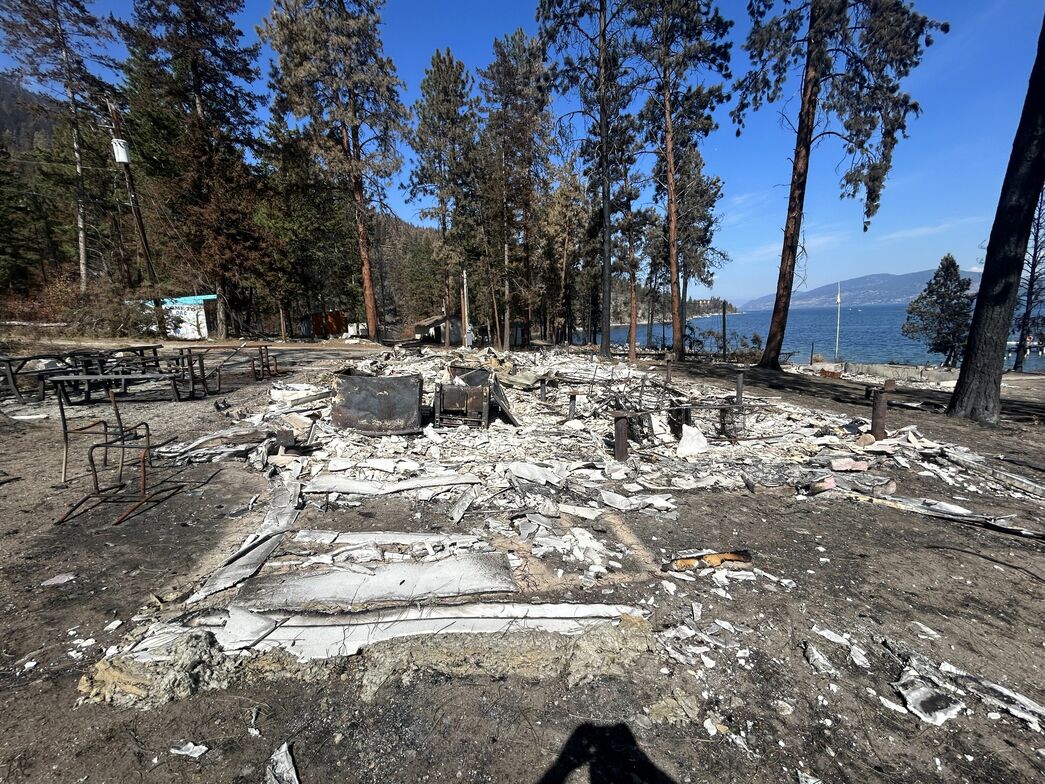
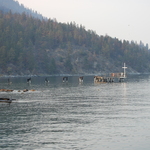
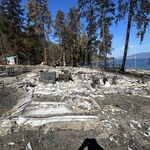
On August 17, the McDougall Creek Wildfire surged toward Okanagan Lake. By the early hours of August 18, it had reached Camp OAC. Every camper, staff member and volunteer was safely evacuated, but 26 buildings, about 95% of the camp's structures, were lost, along with the dock and more than 500 trees.
It was weeks before anyone could even return to the site.
Fall 2023: Insurance and clean-up
Work began right away on the insurance claim, a complex but essential process that now forms the financial foundation of the rebuild. At the same time, the camp had to apply for permits just to clear the site. Clean-up began a few months after the fire, removing debris and making the land safe.
Making the hillside safe
A wildfire doesn't just take buildings. It burns away the trees and plants whose roots hold a hillside together. Before anything new could be built, a geotechnical assessment studied the soil and slopes to determine what work was needed. From there, the ground itself got attention: stabilizing slopes, managing drainage and regrading parts of the site so that new buildings would sit on safe, stable ground for decades to come.
This work is invisible once it's done, but nothing else can safely happen without it.
2024: An unexpected discovery
As plans came together to reopen in 2024, a new challenge emerged: archaeological restrictions on the property.
Camp OAC sits on the traditional, unceded territory of the Syilx/Okanagan Peoples, and the land holds a history much older than our 75 years. Before any rebuilding could happen, the camp needed to work with archaeologists, the provincial government and Westbank First Nation to understand what was required and to secure the proper permit.
It became clear that reopening in 2024 wasn't possible. And because the permit process took longer than anyone hoped, camp also had to stay closed in 2025.
We won't pretend that wasn't hard. But this was never a box to tick. It was part of a real process of truth and reconciliation, and it deserved to be done with care.
2025: Permit in hand and a smarter design
With the archaeological permit finally secured, the path forward became clear. The process also shaped how we rebuild:
- Gentler foundations. Nearly all new buildings will sit on helical piles, screw-like foundations that need very little digging and disturb far less ground.
- Modular construction. New buildings are built off-site and moved to camp, cutting down on time and impact on the land.
- Ongoing care. Archaeological monitoring continues on site, in coordination with Westbank First Nation.
In late 2025, a campaign planning study gathered input from the wider camp community and confirmed strong support to rebuild.
2026: Real progress on the ground
This year, the rebuild moved from paper to the ground:
- The camper cabin complex and multipurpose flex building were constructed off-site and are waiting for permits to move to camp this fall.
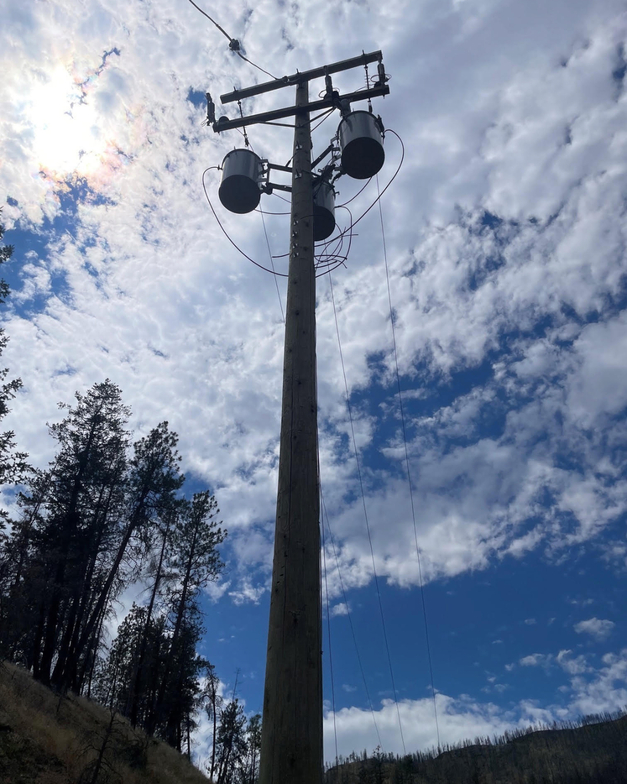
- BC Hydro installed new lines, and camp has permanent power for the first time since the fire.
- Design of the new septic system is complete, and planning for water across the site is well underway.
- The civil drawings for the underground water, power and septic connections are with the Regional District of Central Okanagan (RDCO) for review. Like any development on the lake, this work needs regional approval before it can begin.
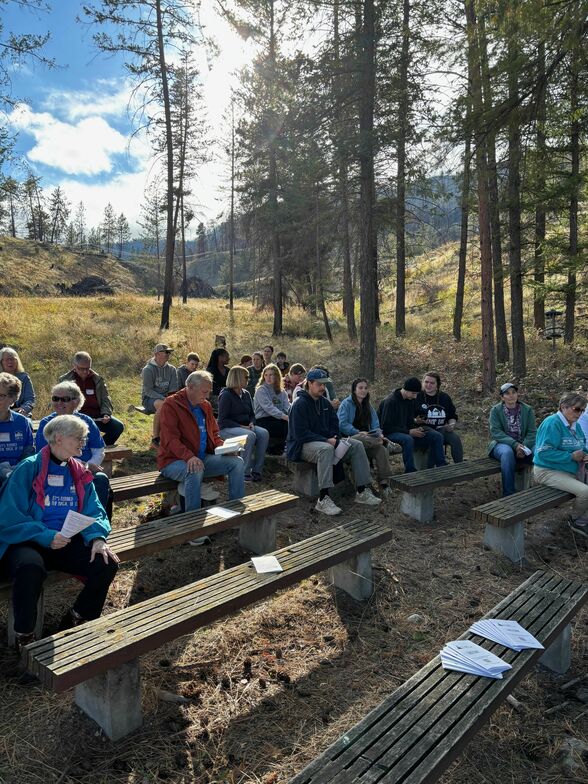
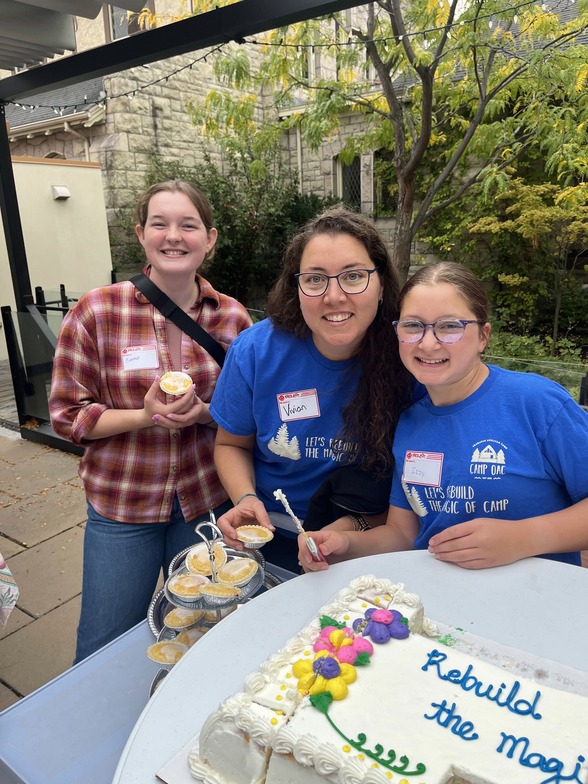
- On October 3, the Rebuild the Magic campaign officially kicked off, and friends of camp planted the first new trees on the grounds.
Summer 2027: Welcoming campers home
Every one of these steps brings us closer to our goal: welcoming campers back for overnight camp on Okanagan Lake in Summer 2027.
The new camp is being built to last. It will be safer, more fire-resilient, accessibly designed, and rooted in respect for the land it sits on. The wait has been long, but it means the camp we open will serve children for generations, not just the next few summers.
How you can help
Thanks to your generosity, we've raised $981,000 toward Rebuilding the Magic of Camp. To build the second camper cabin we need, we have to raise another $600,000.
Thank you for your patience and your support through every step of this journey. To be part of what comes next, visit campoac.com/donate